Crib shopping has its own vocabulary, and nobody hands you the glossary. Standard, mini, convertible, portable — the crib size and crib mattress size labels on the box all seem like they should matter, and it’s fair to wonder how much they actually do.
Not that much, honestly. Crib sizes in the U.S. are regulated pretty tightly, so there are really only a handful of categories to know. Once you can tell them apart, the rest comes down to practical stuff: how much room you have, how fast your baby is growing, and whether you want something that’ll still be useful in three years.
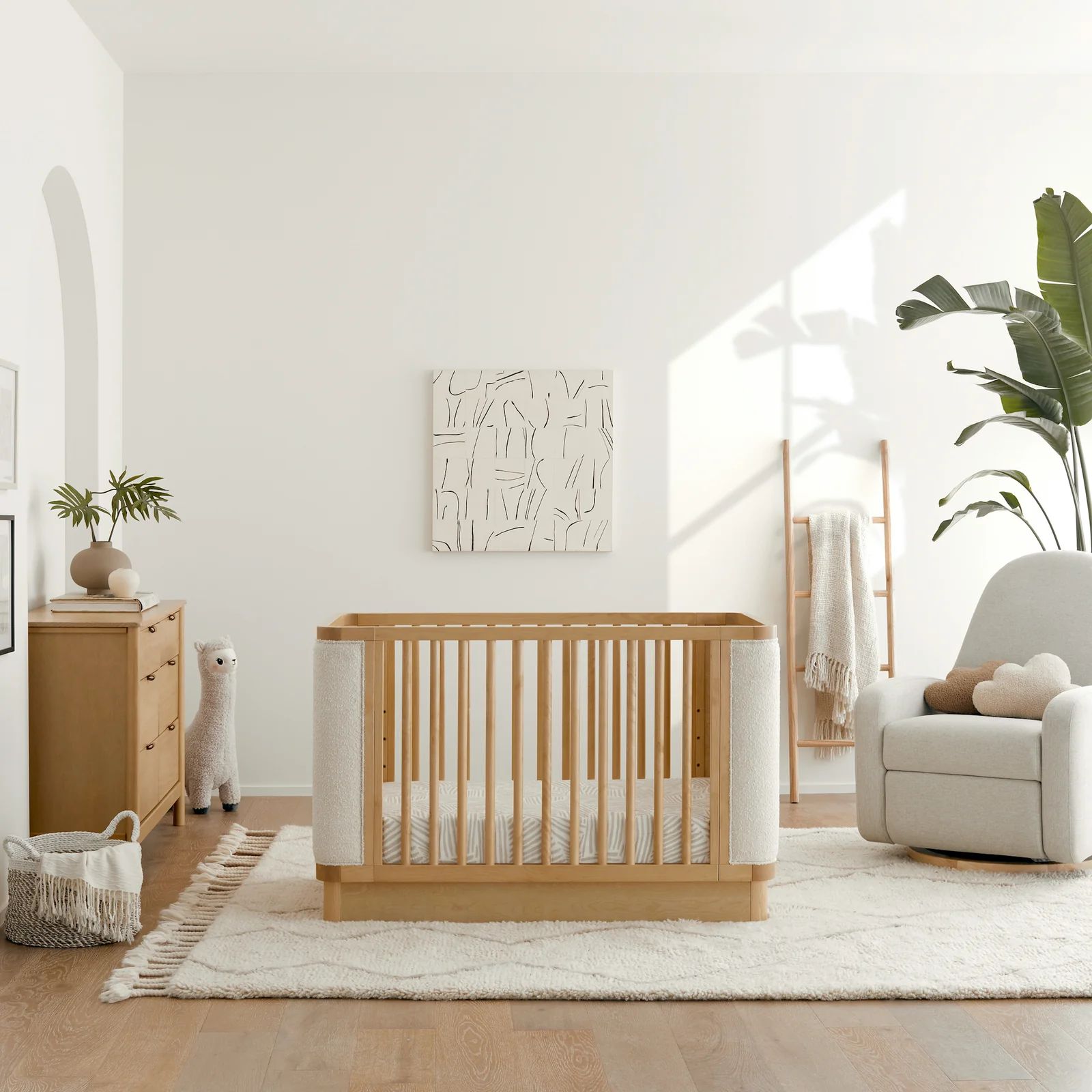
Crib Sizes at a Glance
| Type | Sleep Surface (Interior) | Typical Footprint | Age Range |
| Bassinet | ~28″ x 16″ | ~32–34″L x 22″W | Birth to 4–6 months |
| Mini Crib | ~37″ x 24″ | ~39–40″L x 26″W | Birth to 18–24 months |
| Moveable / Rolling Crib | Varies by stage (~30″–52″) | ~53–54″L x 30″W | Birth to ~5 years |
| Standard / Regular Size Crib | 52 ⅜” x 28″ | ~55–56″L x 29″W | Birth to ~3 years |
| Convertible Crib | 52 ⅜” x 28″ | Standard footprint | Birth to adulthood |
What Is a Standard Crib Size?
A standard crib, also called a regular size crib or full-size crib, has an interior sleep surface of 52 ⅜″ long by 28″ wide. Federal safety rules set that measurement with a tolerance of just ⅝″ in either direction, which is why any standard crib mattress fits any regular size crib. The compatibility is legislated, not brand-specific.
Exterior footprint runs a little larger, usually 55–56″ long by around 29″ wide, depending on how thick the rails are and whether the crib has feet or casters. That exterior number is the one that matters when you’re measuring a wall.
Are all cribs the same size? Full-size cribs, essentially yes. Mini cribs, bassinets, and portable cribs aren’t covered by that same interior standard, so their dimensions vary by model. This is exactly why mattress shopping gets confusing for anything other than a standard crib.
Full size crib dimensions are set by federal safety rules: the interior must measure 52 ⅜” ± ⅝” long by 28″ ± ⅝” wide. That’s why any standard crib mattress fits any regular-size crib. The compatibility is legislated, not brand-specific.
Crib Mattress Sizes
More parents search for crib mattress dimensions than for crib dimensions, and the two questions are really one question, since a mattress that doesn’t fit is a safety problem, not a comfort problem.
A standard crib mattress measures at least 27 ¼″ x 51 ⅝″, and no more than 6″ thick. That’s the federal minimum for a full-size crib mattress, which is what makes the “any mattress, any crib” compatibility work.
Are all crib mattresses the same size? For standard cribs, effectively yes — within a fraction of an inch. But mini crib and bassinet mattresses are their own sizes and aren’t interchangeable with a standard crib mattress. If you buy a mini crib, buy the mattress made for it.
Two checks before you commit to any mattress:
- The two-finger test. No more than two fingers should fit between the mattress and the crib side. A larger gap is an entrapment risk.
- Thickness. Stay at or under 6″ for a full-size crib mattress. Thicker mattresses reduce the effective height of the crib sides.
| Mattress type | Typical dimensions | Fits |
| Standard crib mattress | 27 ¼″ x 51 ⅝″, ≤6″ thick | Any standard, regular size, or convertible crib |
| Mini crib mattress | ~24″ x 38″ (varies by model) | Only the mini crib it’s made for |
| Bassinet mattress/pad | Varies widely | Only that bassinet |
Mini Crib Dimensions
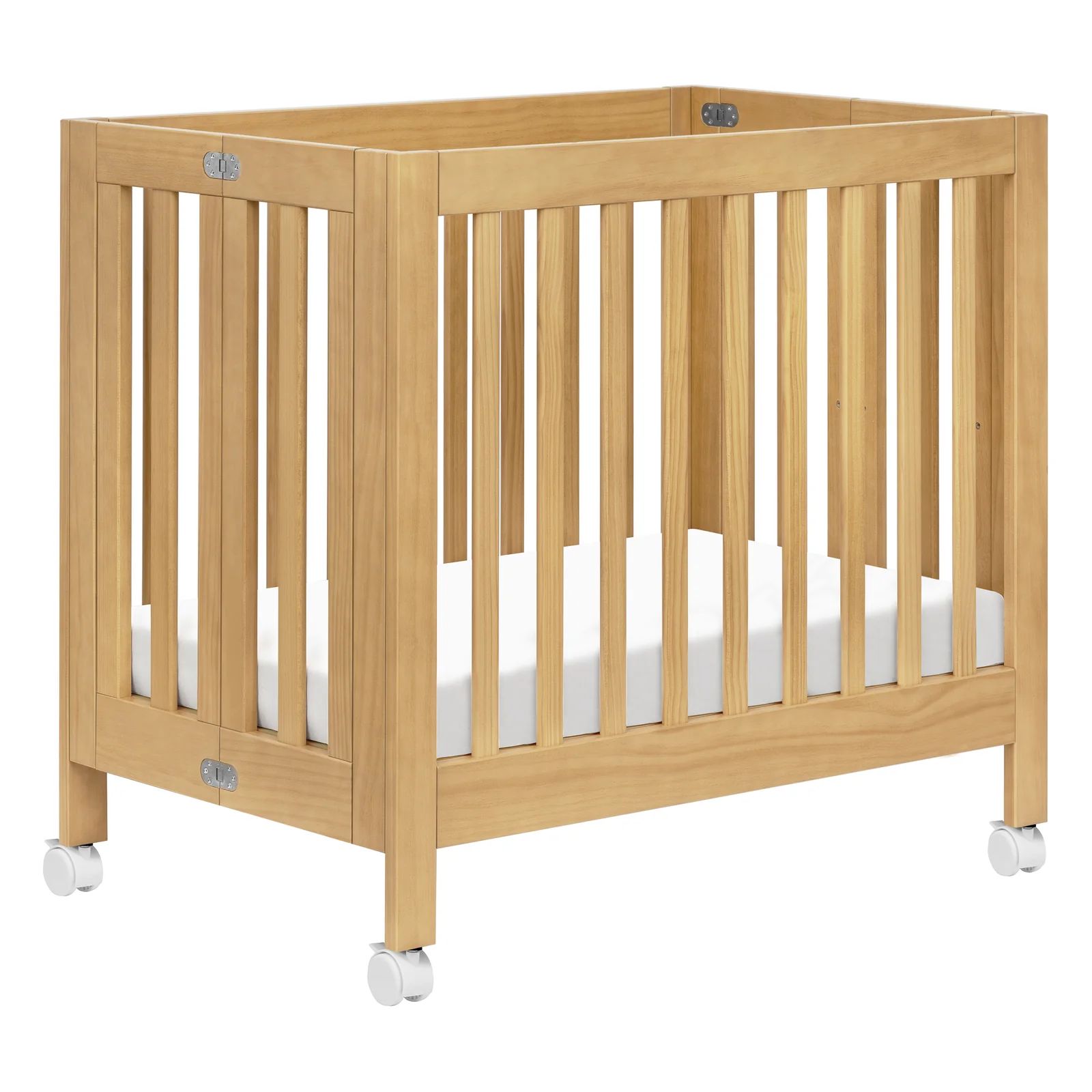
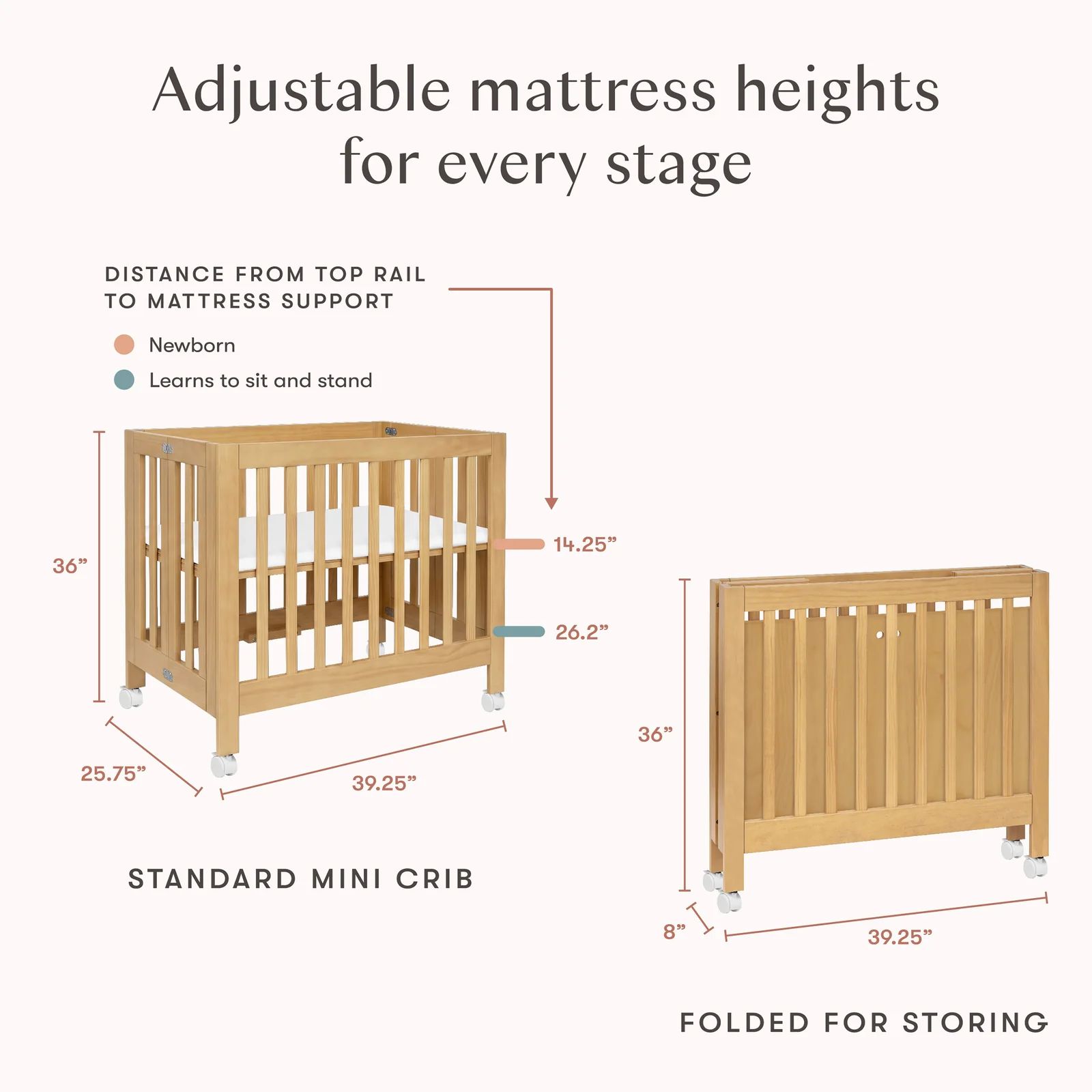
A mini crib gives you roughly a year or more of use in noticeably less floor space. Sleep surfaces run around 37″ x 24″, with an exterior footprint near 39–40″ long by 26″ wide. This means it fits where a standard crib simply won’t.
The Babyletto Origami Mini Crib is built for exactly that situation: it folds flat for storage and holds babies up to 45 lbs or 35″ tall. Its 37″ x 23.5″ mattress is a mini-specific size, so don’t plan to reuse a standard mattress.
Mini Crib vs. Standard Crib
| Mini crib | Standard crib | |
| Interior | ~37″ x 24″ | 52 ⅜″ x 28″ |
| Footprint | ~39–40″ x 26″ | ~55–56″ x 29″ |
| Typical use | Birth to 18–24 months | Birth to ~3 years |
| Mattress | Mini-specific, not interchangeable | Any standard crib mattress |
| Best for | Small rooms, apartments, room-sharing, grandparents’ homes | Rooms with the floor space for it |
The honest trade-off: a mini crib buys you space now and costs you a year or two of use later. If your room can take a standard crib, take the standard crib. If it can’t, a mini crib in a workable spot beats a standard crib you have to squeeze past.
Bassinets vs. Mini Cribs: The First Six Months
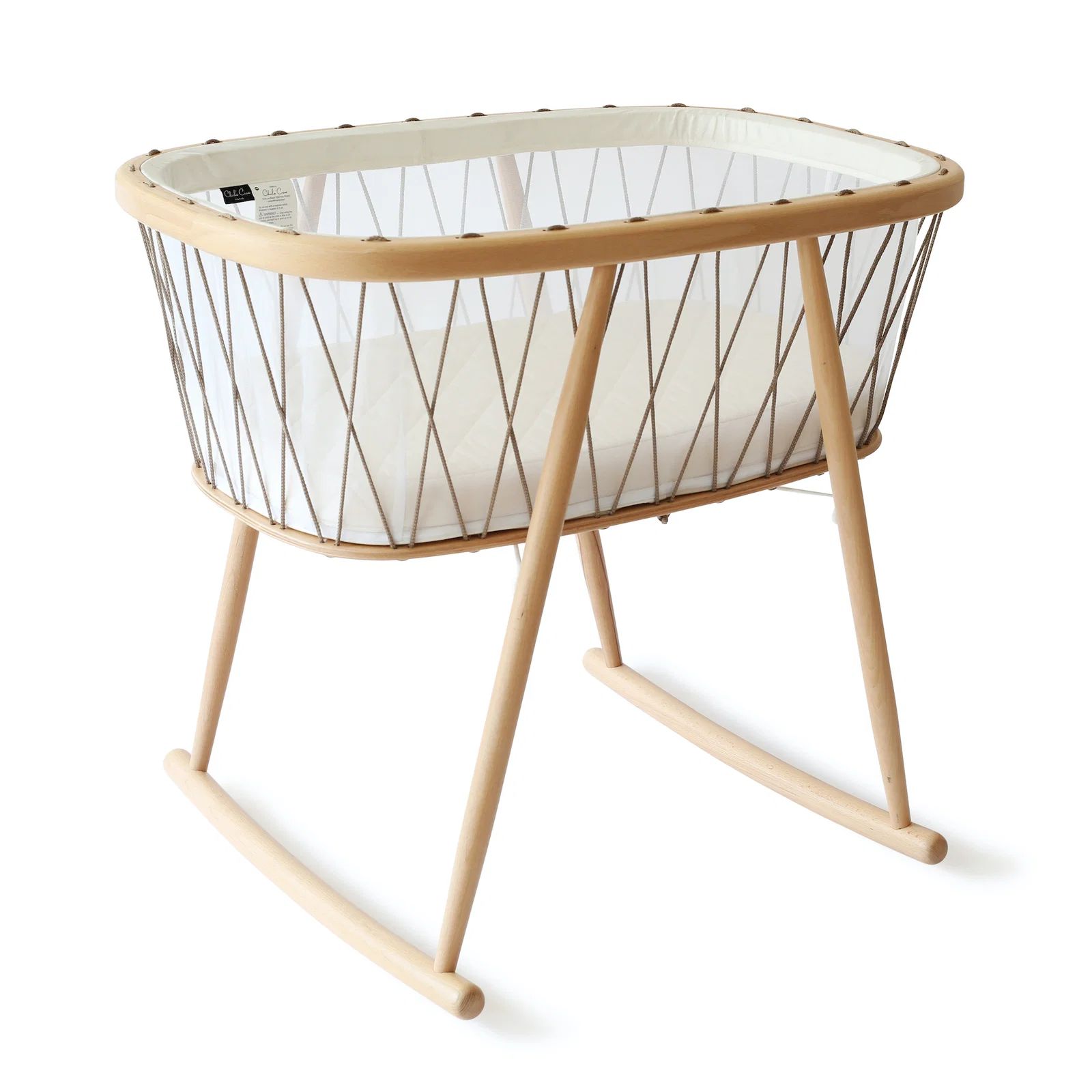
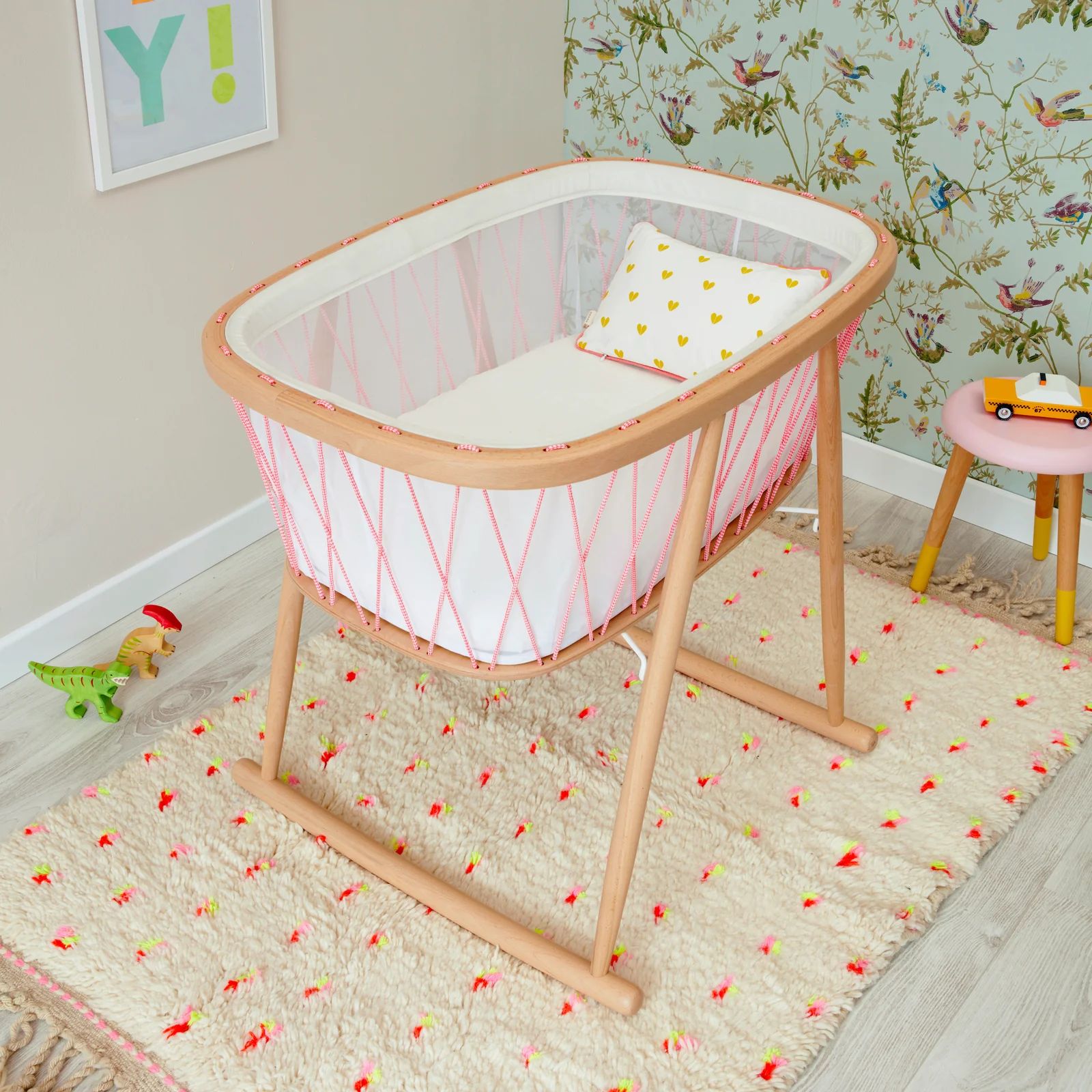
If you’re room-sharing, a bassinet is the smallest infant crib size available. The Kumi Bassinet is a true standalone bassinet at 32″ x 22″. It tucks beside a bed where nothing else fits, but most babies outgrow bassinets by 4–6 months, or sooner if they roll or push up.
When to Move From Bassinet to Crib
Most babies make the move somewhere between 4 and 6 months — but age isn’t the trigger. Move to a crib when any of these happen first:
- Your baby rolls over or pushes up on their hands and knees
- They reach the bassinet’s stated weight limit (often 15–20 lbs, but check yours)
- They look cramped, or their head and feet approach the ends
- They can sit up unassisted
Worth knowing: the Yuzu 8-in-1 starts in bassinet mode (29.75″ x 19.75″) and grows into a full crib, so you skip buying two pieces and skip the transition entirely.
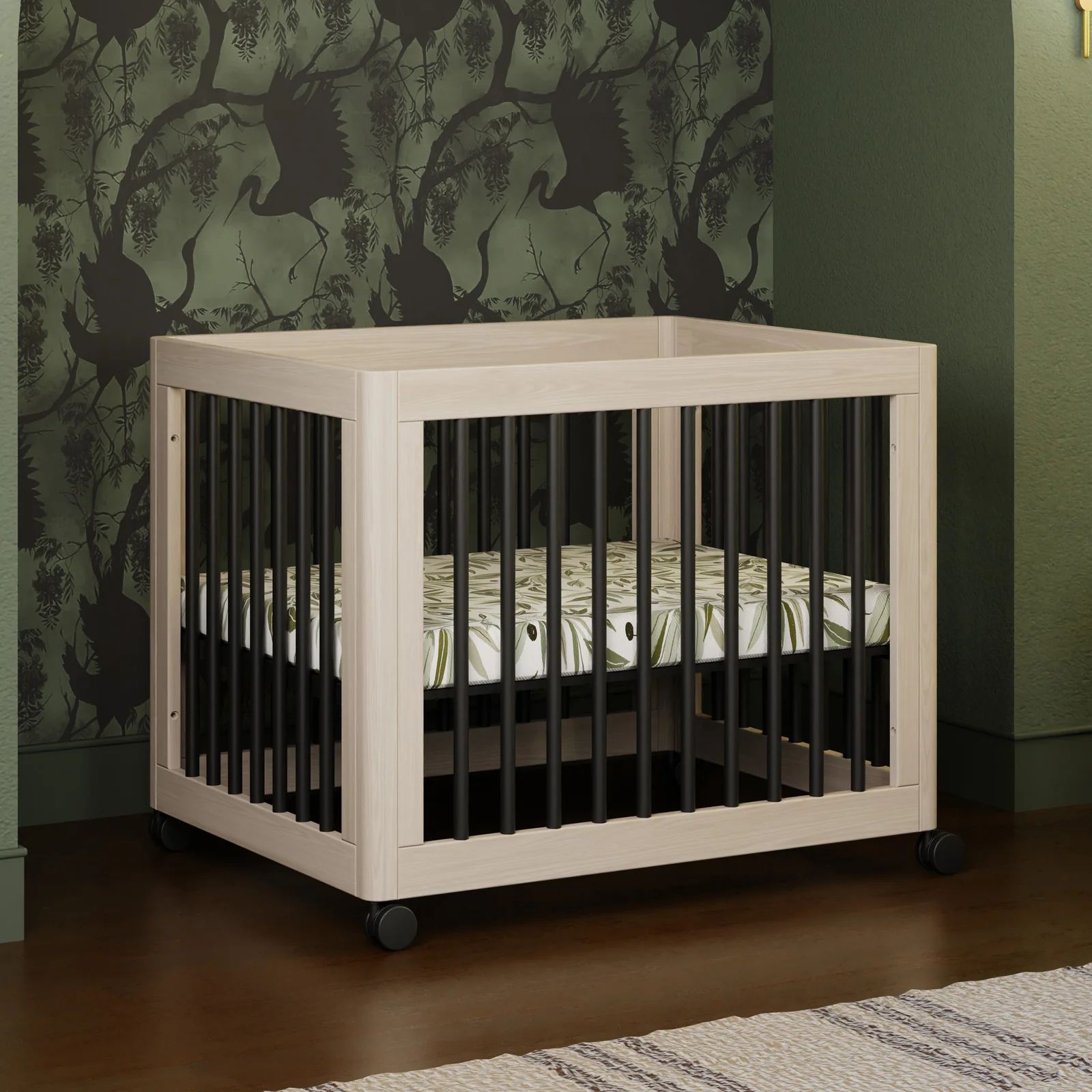
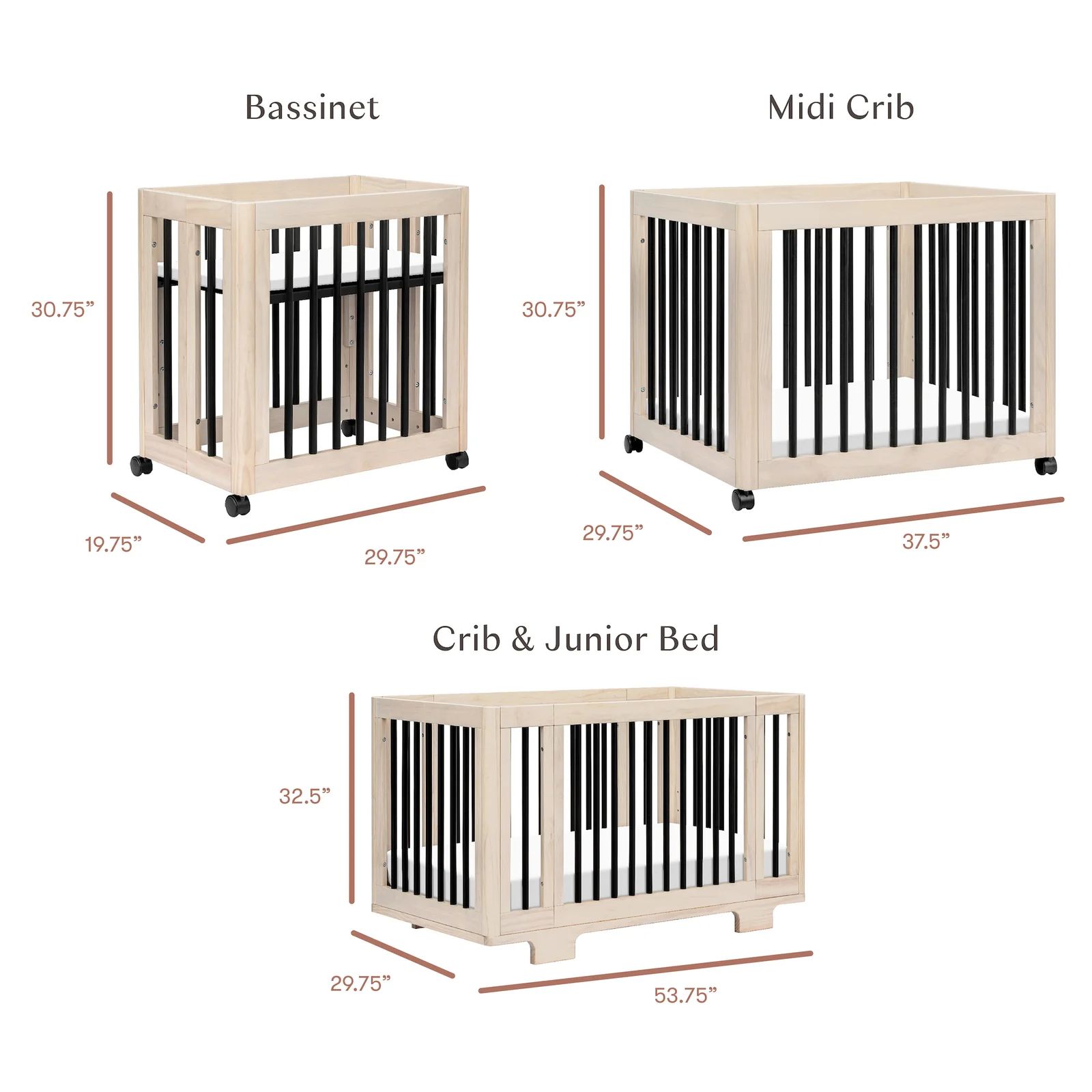
Yuzu 8-in-1 Convertible Crib with All-Stages Conversion Kits
Standard vs. Convertible Cribs: The Long-Term Investment
Every crib in this section is the same footprint, what differs is where it ends.
The daVinci Jenny Lind 3-in-1 is the classic baseline: 52″ x 28″ interior, converting to a toddler bed and daybed, then done. That covers roughly three years.
Convertible cribs keep going. The Babyletto Pogo 8-in-1 moves through bassinet, midi crib, standard crib, toddler bed, daybed, and junior bed, with optional All-Stages kits that take it all the way to a full-size bed. Meanwhile, the Rolli 9-in-1 does the same on locking caster wheels — useful if the crib needs to move between rooms.
What is a convertible crib? It’s a crib with the same standard 52 ⅜″ x 28″ interior as any other full-size crib, plus hardware and rails that let it reconfigure into later bed formats. The crib size doesn’t change; the number of lives it has does.
How to Convert a Crib Into a Full-Size Bed
This is the part most crib listings gloss over. Converting a crib to a full-size bed isn’t a folding trick — the crib’s headboard (and sometimes footboard) becomes the headboard of a full bed, joined by a separate metal bed frame and rails.
What that means practically:
- You need a conversion kit. For most convertible cribs, the full-size rails are sold separately from the crib. Check availability before you buy the crib, not three years later.
- You need a full-size mattress. A full mattress is 54″ x 75″ — the crib mattress does not carry over.
- The footprint changes completely. A full bed is wider and much longer than the crib’s 55–56″ footprint. Plan the room accordingly when the time comes.
- Timing is usually age 5+. Most families convert to a toddler bed first, then to a full bed years later.
If lifetime use is the goal, look for cribs that explicitly list full-size conversion — like the Pogo 8-in-1 and Yuzu 8-in-1 with All-Stages kits — rather than assuming a “convertible” label includes it.
Crib Weight and Height Limits
Crib size tells you if it fits your room. Weight and height limits tell you when your child outgrows it.
- Standard cribs: typically around 50 lbs, with the real limit usually being height — once your child is about 35″ tall or can climb out, the crib is done regardless of weight.
- Mini cribs: often 45 lbs or 35″ tall, whichever comes first (the Origami uses exactly these limits).
- Bassinets: commonly 15–20 lbs, but rolling over usually ends bassinet use before weight does.
Always use the limit printed on your specific model. These vary by manufacturer, and the number on the box beats any general rule.
How to Measure Your Nursery Space
- Measure the wall run. Budget the crib’s exterior length plus 6″ of breathing room.
- Leave 3 feet of clearance on at least one long side for lifting your baby in and out.
- Check the door swing and closet clearance before committing to a wall.
- Keep the crib away from windows, blind cords, heaters, and wall hangings.
- Test the mattress gap. No more than two fingers should fit between mattress and crib side.
Match the crib size to the room you actually have.
Crib Size FAQ
A standard crib has an interior sleep surface of 52 ⅜″ long by 28″ wide, with a federal tolerance of ⅝″. The exterior footprint is usually 55–56″ long by about 29″ wide.
A standard crib mattress is at least 27 ¼″ x 51 ⅝″ and no more than 6″ thick. Mini crib mattresses are smaller (around 24″ x 38″) and are not interchangeable.
For full-size cribs, yes — federal rules keep them within a fraction of an inch of each other. Mini crib and bassinet mattresses are model-specific and vary.
Full-size cribs are, by regulation. Mini cribs, bassinets, and portable cribs aren’t covered by that standard, so their dimensions differ by model.
Roughly 37″ x 24″ inside, with an exterior footprint near 39–40″ x 26″ — about a foot shorter than a standard crib.
Usually 4–6 months, but go by milestones rather than age: rolling over, pushing up, sitting unassisted, or hitting the bassinet’s weight limit.
No. Only cribs that specifically list full-size conversion, and they typically require a separately sold conversion kit plus a full mattress.