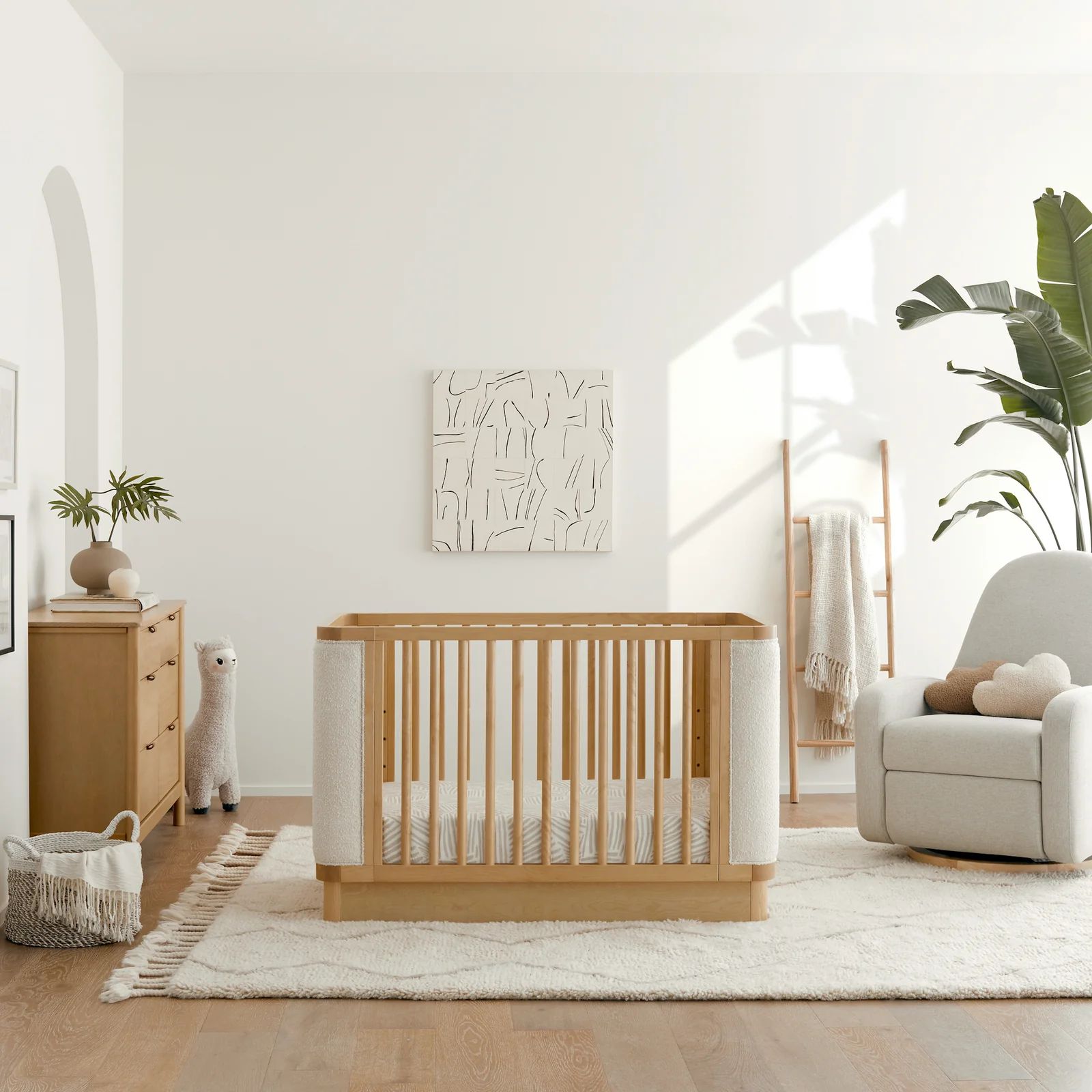
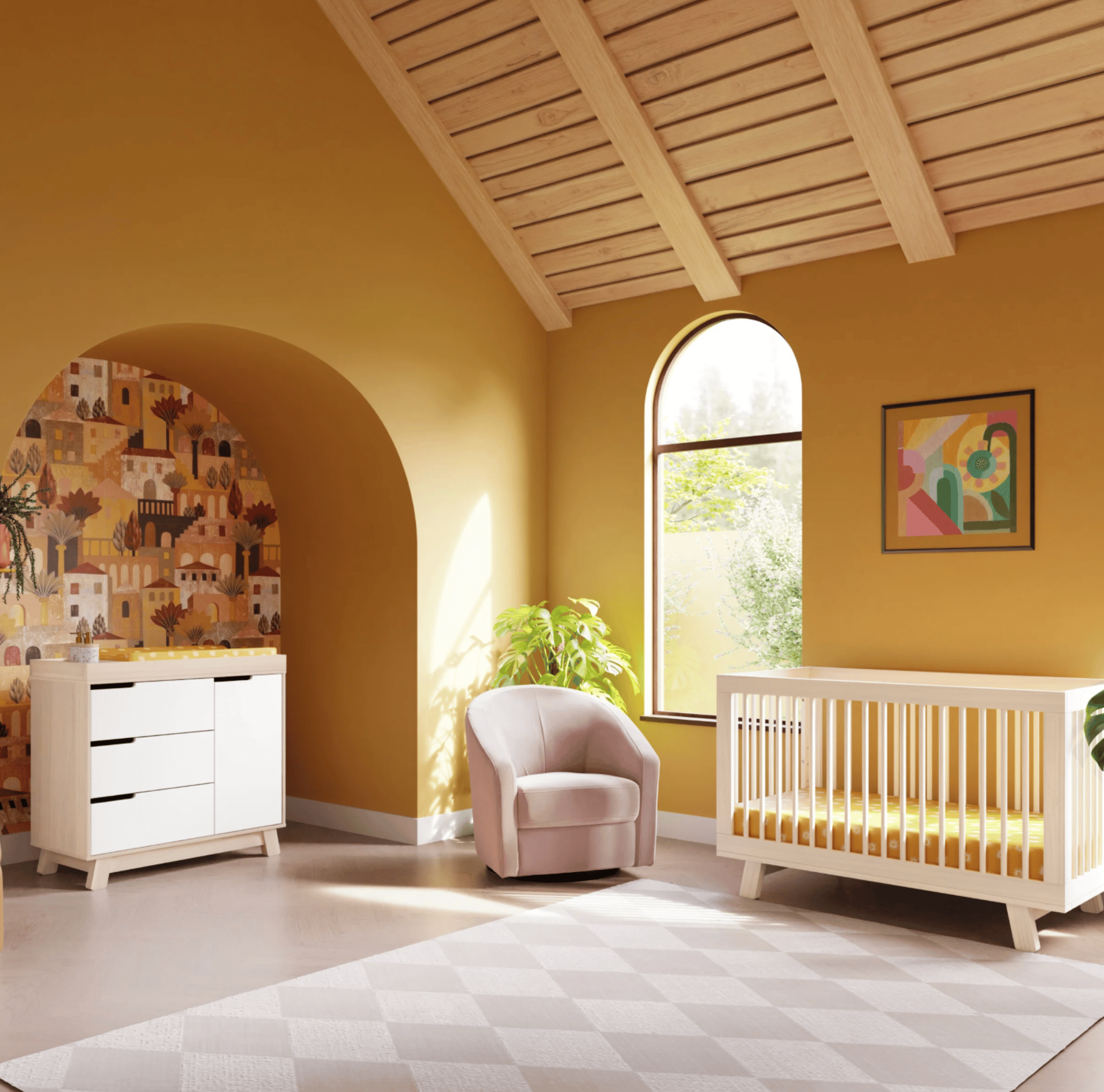
Walk into any nursery and the floor tells you everything. Toy cars, puzzle pieces, a stray crayon that never made it back home. It’s a whole little world happening down there. Which is why the best nursery rugs do so much more than look pretty, they’re the softest and hardest-working surface in the entire room.
The short answer, if you’re standing in a store right now: most standard nurseries do best with an 8×10 rug, 5×7 at the smallest, placed so it runs out from under the crib toward the open floor rather than centered beneath it. Low pile, washable, always on a non-slip pad. Everything below is the exception-handling.
A bare floor feels cold and a little lifeless, if we’re being honest. A good rug softens all of that in one sweet layer. It adds warmth underfoot, cushions every wobbly first step, and turns a plain room into something that finally feels like it belongs to your child. Rugs also gently mark boundaries, a rug tucked under a play table says “this is where the magic happens,” which makes cleanup so much easier.
Now, style isn’t just about looks, though a pretty, colorful rug really does bring a room’s whole personality to life. In a play area, a well-chosen rug hushes the clatter of toy trucks, gives baby a soft, safe spot for tummy time, and creates a gentle visual anchor for where playtime begins. A durable rug is also a quiet little lifesaver, hiding scuffs and stains far better than bare hardwood ever could.
What Size Rug for Nursery Rooms?
This is the one parents get wrong most often, and it’s almost always the same mistake, going too small. But there isn’t one correct nursery rug size, because the right answer depends on what you want the rug to do.
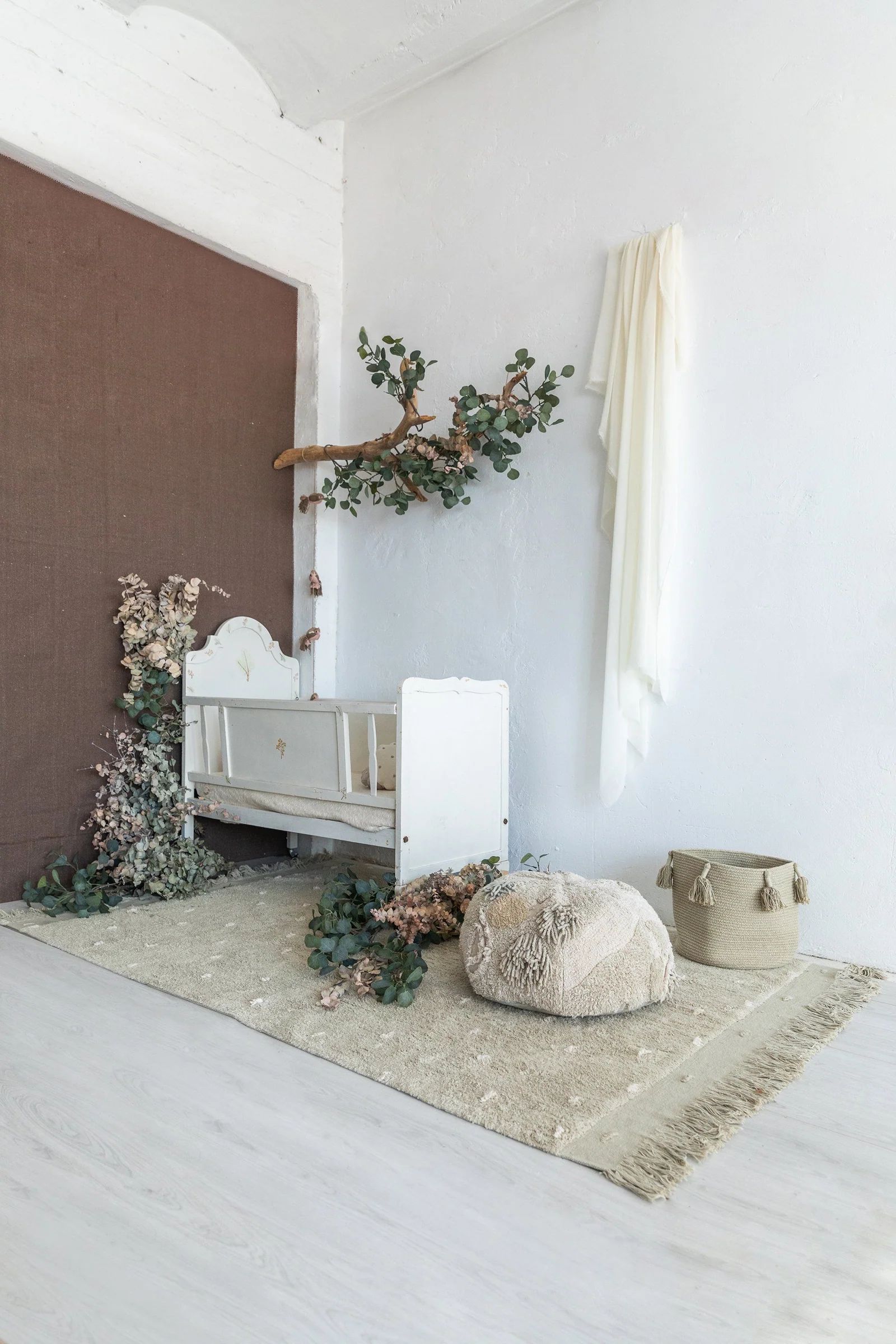
The rule that always holds: front legs of the crib and chair sit on the rug, with about a foot of bare floor left at the walls.
Two rules make the whole thing simple:
- Cover the floor — a continuous soft surface for tummy time and crawling. This is the biggest rug you can fit.
- Anchor the crib and chair — just the central zone where you’ll spend your nights. The most common choice, and the most versatile.
- Soften one spot — a compact room or a nook needs a landing pad, not a floor plan.
Rug size for nursery layouts
| Your nursery | Cover the floor | Anchor crib + chair | Soften one spot |
| Compact room or nook | — | 4′ x 5’3″ | 3′ x 4’3″, or a 5′ round |
| About 8×10 ft | 4’7″ x 6’7″ | 4’7″ x 6’7″ | 4′ x 5’3″, or a 5′ round |
| About 10×10 ft | 5’7″ x 8′ | 4’7″ x 6’7″ | 4′ x 5’3″, or a 6’7″ round |
| About 10×11 ft | 6’7″ x 10′ | 5’7″ x 8′ | 4′ x 5’3″, or a 6’7″ round |
| Larger or shared room | 6’7″ x 10′ | 5’7″ x 8′ | 6’7″ round |
A note on the numbers: our rugs are handmade to European dimensions, so they run in sizes like 4’7″ x 6’7″ rather than a rounded 5×7. Same footprint in practice — just measure to the actual dimensions rather than the nickname. Tape the outline on the floor before you order, it takes five minutes and saves a return.
Round nursery rugs
A round nursery rug is the quiet problem-solver. It works beautifully under a hanging chair, tucks into a corner reading nook, and breaks up a room that feels too boxy. In a small nursery, a 5′ round can do the work of a much larger rectangle without crowding the floor.
Nursery Rug Placement: Where Does It Actually Go?
Once you’ve settled your nursery rug size, placement is the next thing worth getting right, and it takes about thirty seconds to understand.
Rug under crib, but not centered under it. Slide the rug so it starts beneath the crib and extends outward into the open floor. Centering it under the crib buries most of the rug behind furniture where nobody walks or plays. Getting the rug under crib placement right is the difference between a room that flows and one that feels chopped up.
Give the glider a soft landing. At 2 a.m., bare feet find the floor before your eyes are properly open. Make sure the rug reaches at least under the front legs of the glider or rocker.
Leave room for the play zone. The open stretch of rug in front of the crib becomes tummy time, then crawling, then a LEGO city. Plan for it now.
And the non-negotiable: a non-slip rug pad, every time, on every floor type. It keeps the rug from sliding underfoot, adds cushion for crawling knees, and helps the rug wear evenly. Buy the pad about an inch smaller than the rug on all sides.
Worth one factual note here: nursery rug placement is about the floor, not the crib itself. Nothing loose, plush, or padded belongs inside the crib. The AAP safe sleep guidance is the place to read up on that.
Types of Nursery and Baby Room Rugs
Not every room calls for the same rug, and that’s honestly the fun part.
Area rugs for children’s bedrooms tend to lean sweet and decorative: soft pastels, whimsical shapes, a print pulled straight from a favorite storybook. Plush texture matters more here than heavy-duty durability.
A baby room rug puts softness above everything, since babies spend so much of their day right there on the floor. Low pile, hypoallergenic materials, and no fringe (a choking risk for little crawlers) make the extra research worth it. If you’re specifically hunting a soft rug for nursery floor time, this is the category to start in.
Playroom carpets need to weather spilled juice, marker mishaps, and the occasional LEGO avalanche with grace, resilience over delicacy.
Kids playroom rugs often blend both worlds beautifully: charming designs paired with sturdier construction, since playrooms see the busiest little feet in the house.
The Best Rug Materials for a Nursery
Picking the right one from the sea of kids rugs online gets so much easier once you know what to look for.
Washable Children’s Rugs
Spills happen, that’s just life with little ones. A washable children’s rug means a juice box disaster doesn’t turn into a week-long ordeal. Machine-washable options, or rugs with removable covers, keep everything feeling fresh and allergen-free.
Honest trade-off: a washable nursery rug is usually flatter underfoot than a thick tufted one. Pair it with a good pad and you get the best of both.
Wool
Wool is the heirloom choice, naturally stain-resistant, quietly durable, and lovely underfoot. Two things to know going in: it costs more, and a wool rug nursery setup will shed for the first few months of vacuuming before it settles down.
Cotton and flat-weave
Budget-friendly, often machine washable, and thinner underfoot. These are the ones that really benefit from a thick rug pad underneath.
Durable Playroom Rugs
Durable playroom rugs hold onto their color and shape through months of scooter laps and dropped toys. Tightly woven fibers and stain-resistant treatments go a long way, a little splurge here really does pay off.
Safety and Non-Toxic Materials
This one isn’t optional, ever. Little hands, and sometimes little mouths, find their way onto everything within reach. When you’re comparing a non toxic nursery rug against a conventional one, look for low-VOC dyes, a non-slip backing, and a low pile for crawlers. If certification matters to you, OEKO-TEX is the standard to look for on textiles, and it’s worth checking on the specific product rather than assuming it across a whole category. Our curated selection includes brands committed to safety standards, and where a rug carries a certification we name it on that product page.
What to skip
High-pile shag near a crib sheds fibers small enough to be a choking concern and is genuinely hard to clean. Rough natural fibers like sisal and jute are beautiful, but they’re scratchy on crawling knees.
Top 10 Stylish Nursery and Kids’ Rugs
Here are ten favorites worth falling in love with, sorted by the mood they bring to a room.
Trendy Designs
Soft geometric shapes, dreamy abstract clouds, and Scandinavian-inspired minimalism have taken over kids’ rooms lately. These age gracefully, so the rug still feels right at home once a toddler grows into a school-age kid with strong opinions about decor.
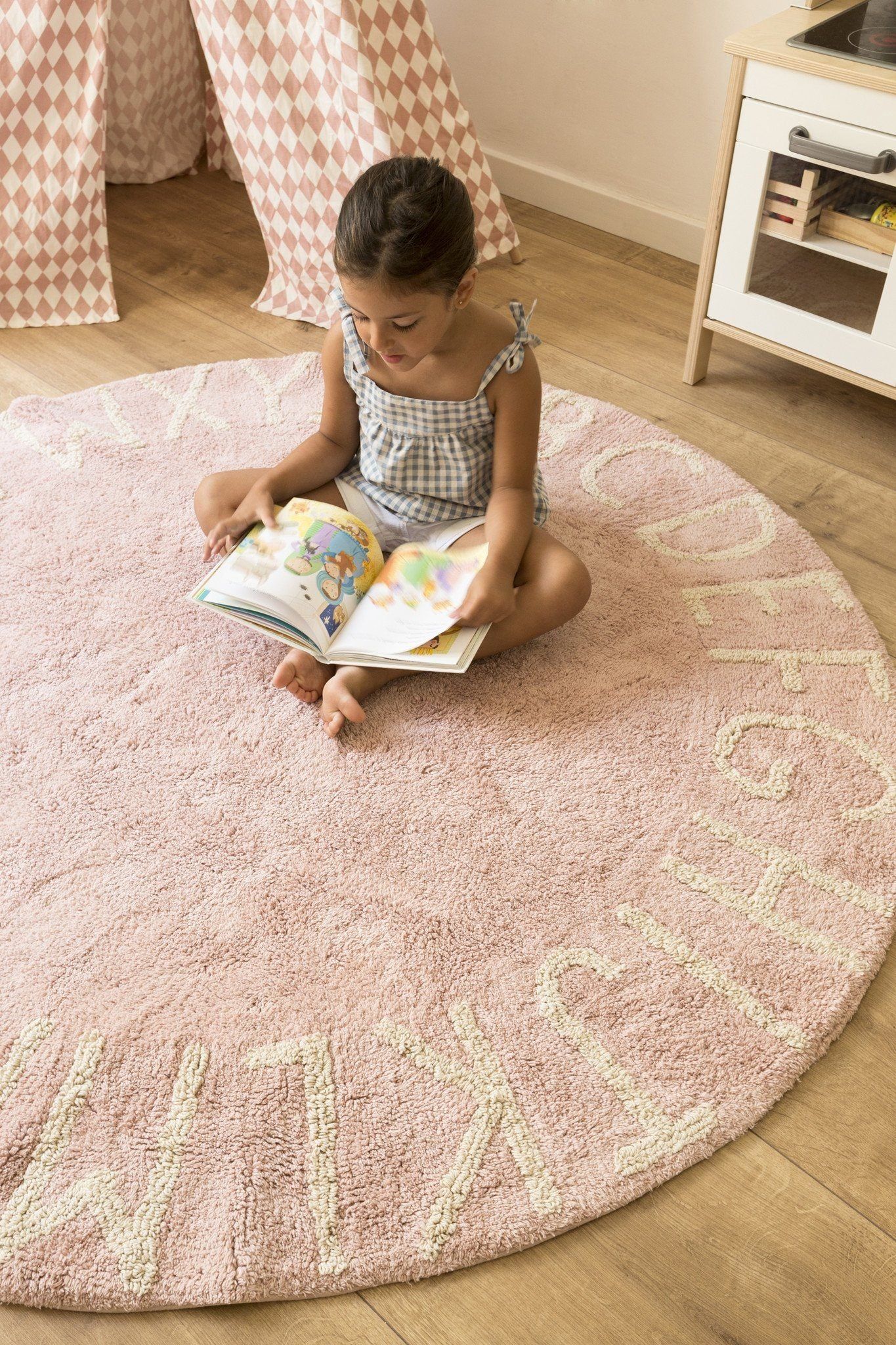
- The Round ABC Washable Rug brings a soft, storybook alphabet print to a nursery reading corner, and its round shape makes it a sweet little anchor under a glider.
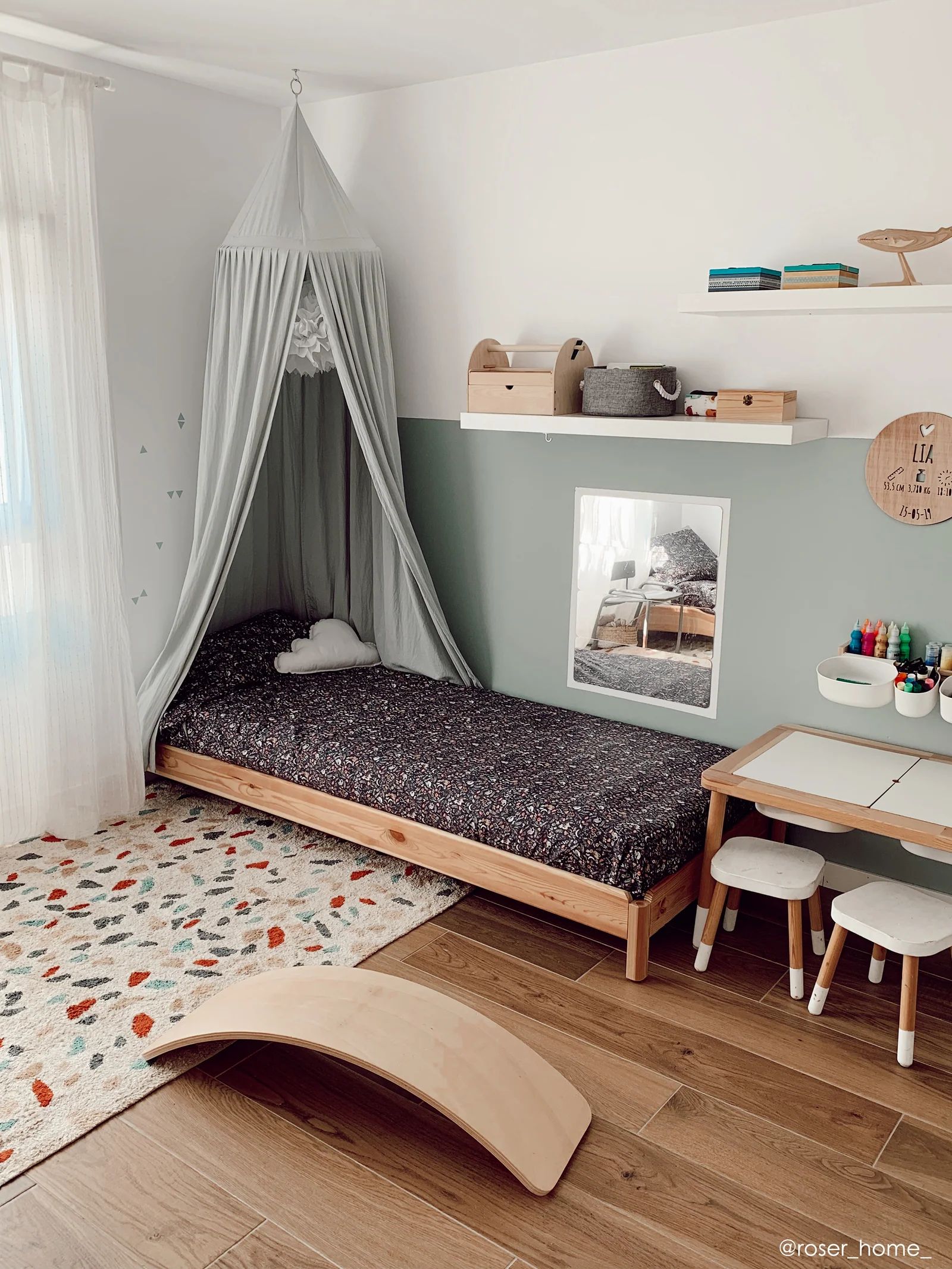
- The Terrazzo Washable Rug leans a little more grown-up, with a marbled pattern that transitions gracefully as a room grows with your child.
- The Woods Symphony Washable Rug in Olive pulls in an earthy, botanical palette that feels right at home in a woodland-themed nursery.
Colorful Patterns
Rainbow stripes, sweet polka dots, and bold color-blocking bring instant charm into a room, no extra decorating required. Busier prints are also a little secret weapon, hiding everyday dirt far better than a solid pastel ever could.
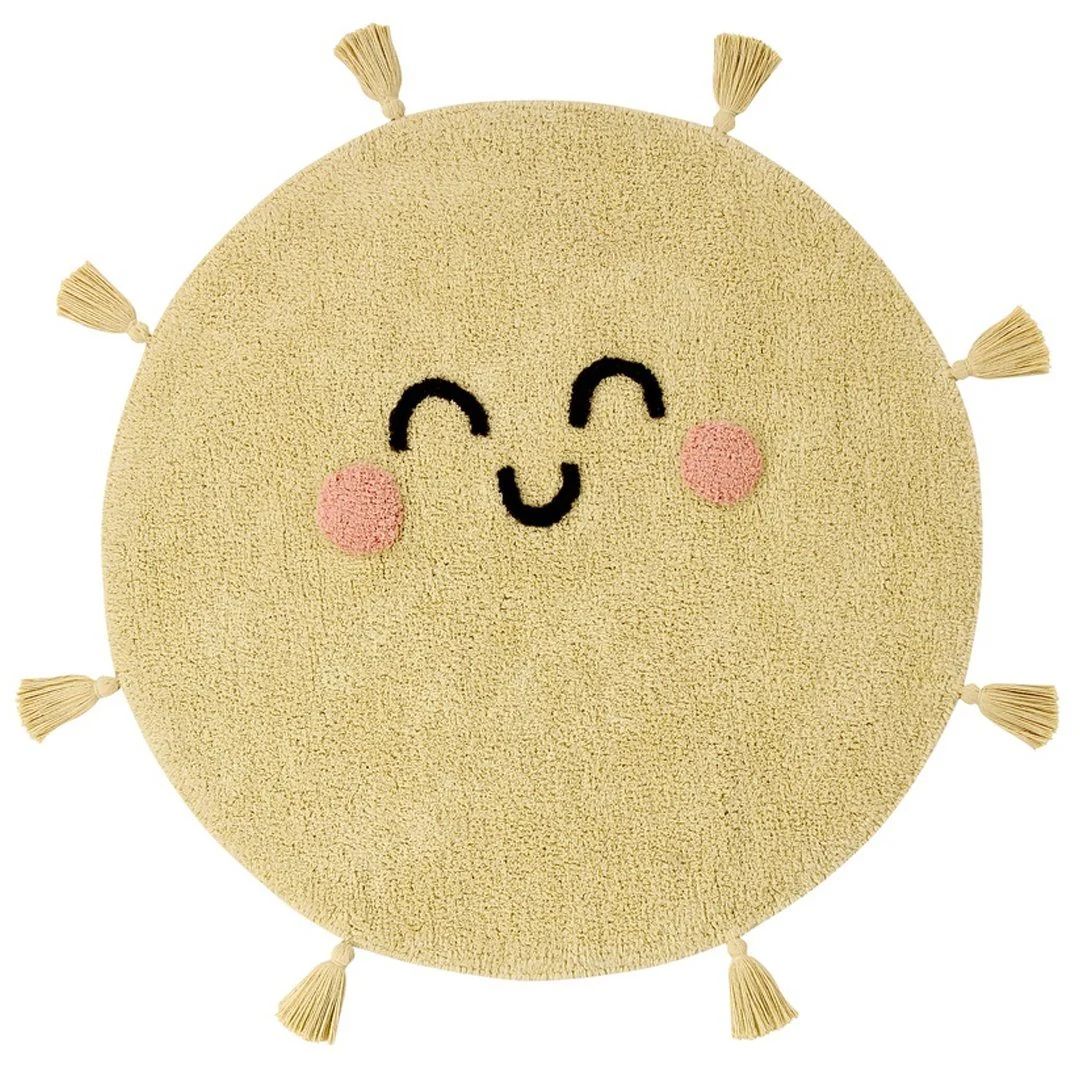
- The You’re My Sunshine Washable Rug is pure warmth, with a sunny motif that brightens even the smallest room.
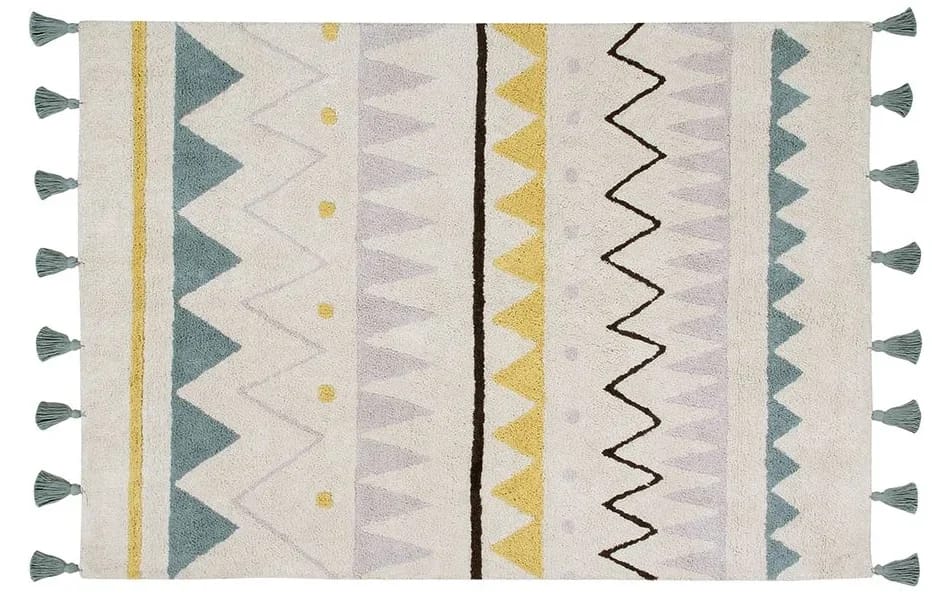
- The Azteca Natural Washable Rug mixes a boho-inspired pattern with soft, muted tones, so it never feels too loud.
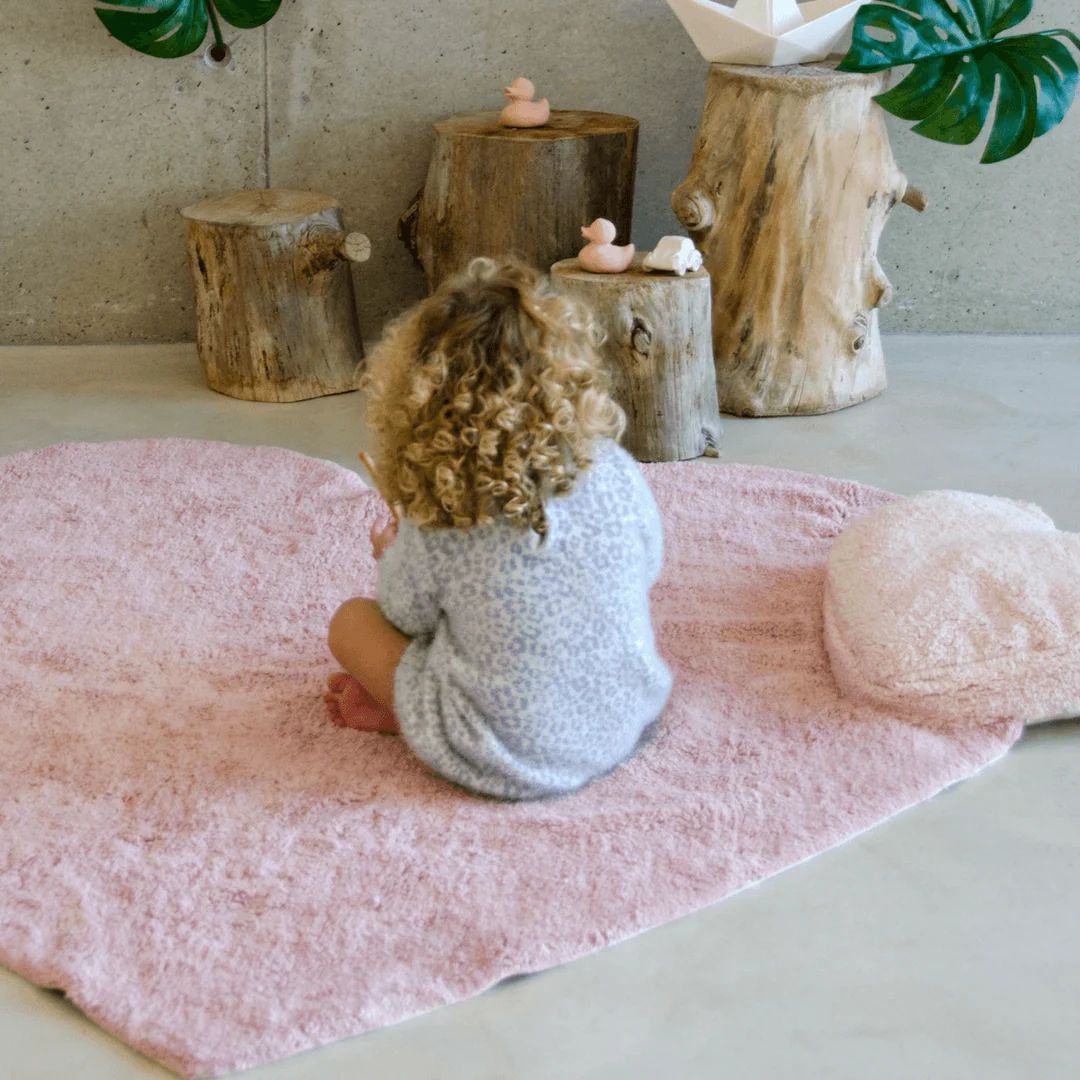
- The Puffy Love Washable Rug is all sweetness, with a dimensional heart design that gives any playroom a little extra charm.
Thematic Rugs
Whimsical space explorers, gentle jungle animals, a tiny city map made just for toy cars — thematic rugs turn floor time into a whole imaginative adventure. A road-map rug alone can keep a little one happily busy for an hour.
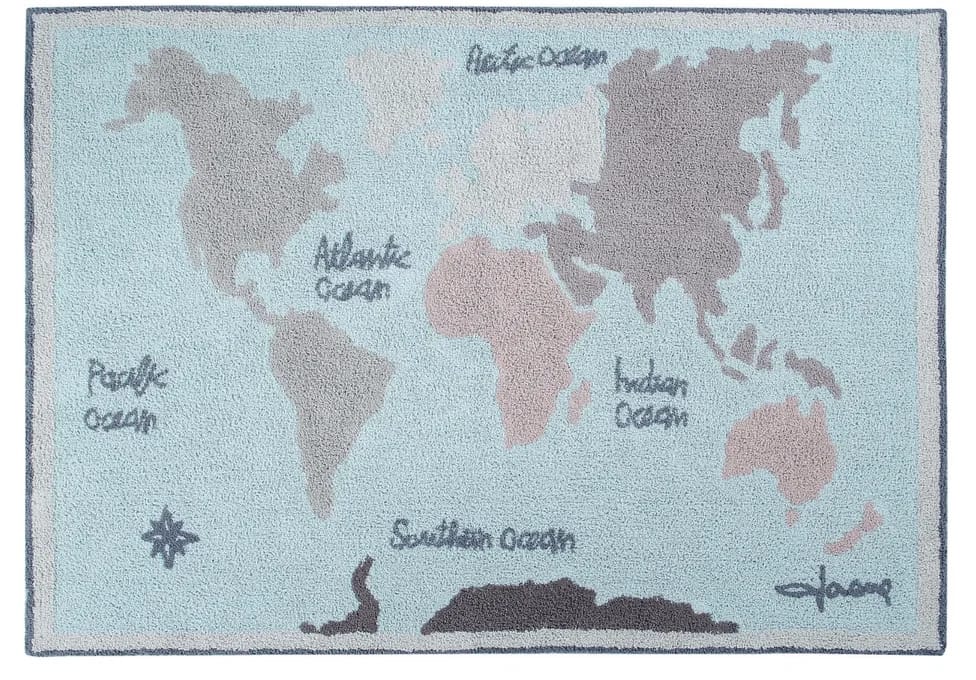
- The Vintage Washable World Map Rug turns floor time into a tiny geography lesson and gives toy cars and planes somewhere to roam.
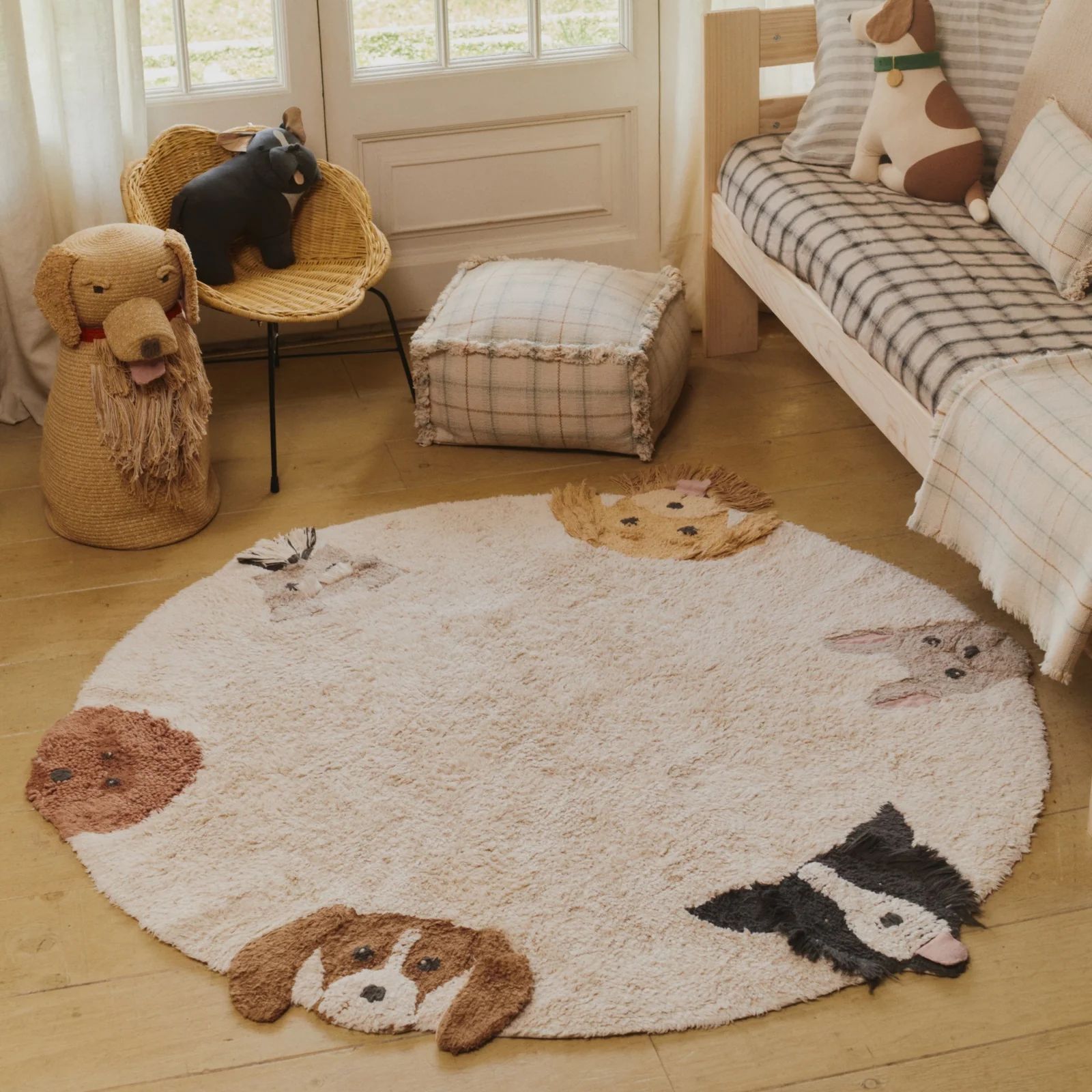
- The Dogs Washable Rug is a playful pick for animal-loving little ones, and it’s become a bestseller for good reason.
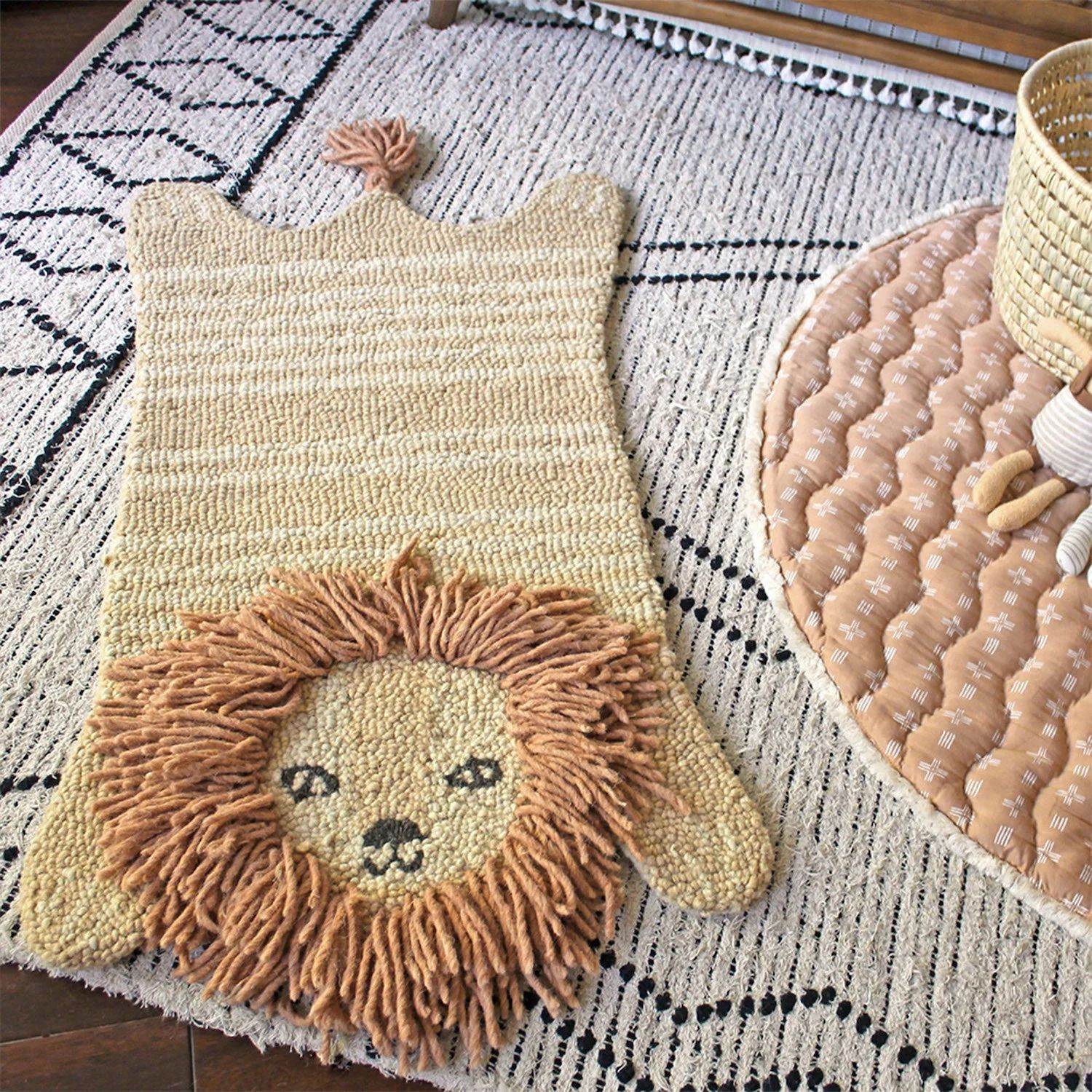
- The Lion Shape Rug is a fun, sculptural accent piece — more of a plush floor friend than a traditional rug.
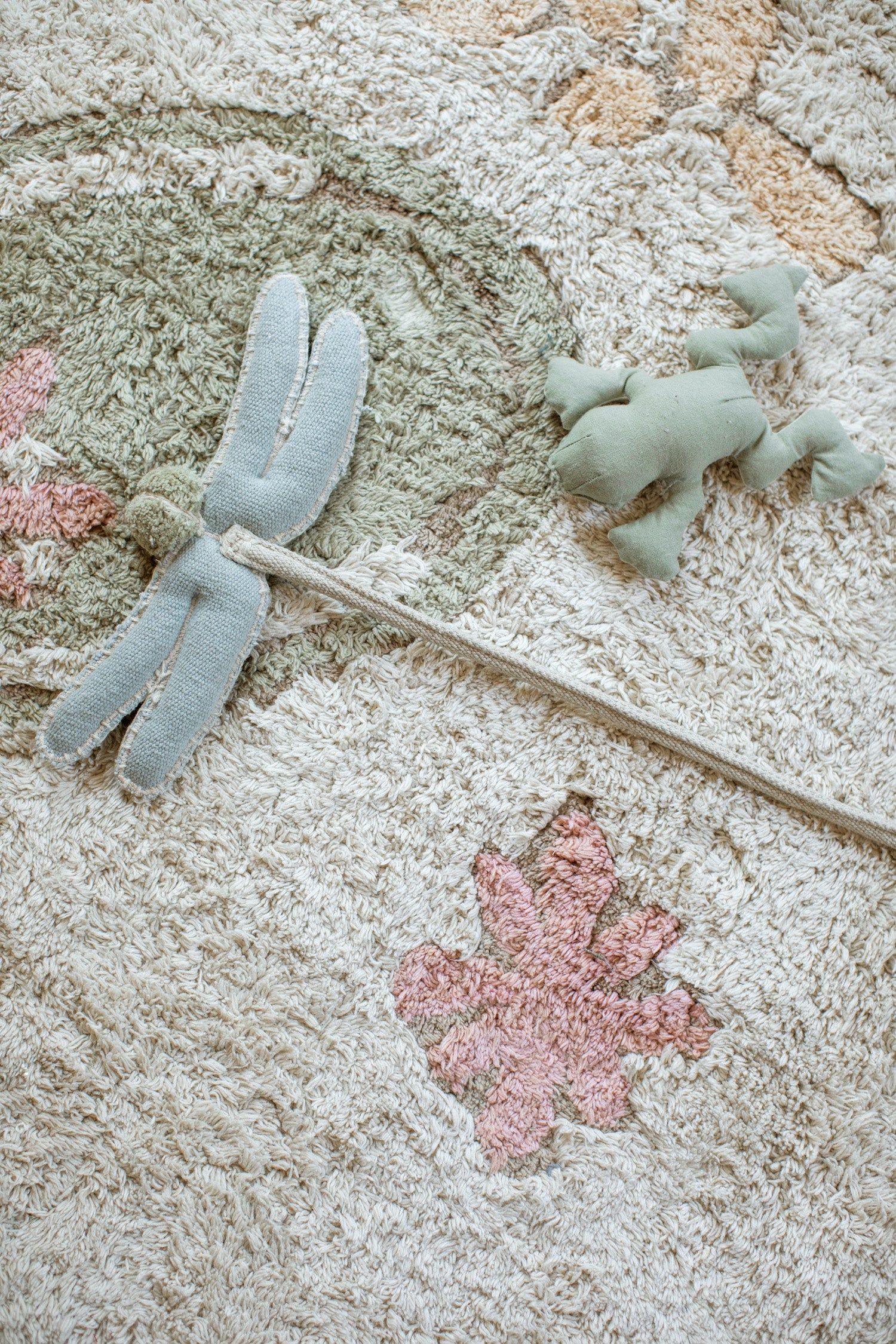
- The Botanic Fantasy Washable Play Rug wraps a room in a dreamy garden scene, perfect for a little one who loves flowers and butterflies.
Tips for Choosing the Right Nursery Rug
Matching Style with Decor
A rug doesn’t need to match the room perfectly, but it should echo at least one soft color or tone already in the space, the curtains, the wall paint, a favorite stuffed animal, even.
Sizing the Rug Correctly
Measure the room first, always. Too small, and the rug feels like a lonely little island. Too large, and it overwhelms a cozy bedroom. Leave a few inches of bare floor peeking out around the furniture as a gentle rule of thumb.
Maintenance and Care
A quick weekly vacuum keeps dust and allergens out of the fibers. Blot spills right away — dried stains are so much harder to lift later. For washable rugs, follow the care label closely, since some delicate materials can shrink in hot water. Rotating the rug every few months also helps it age gracefully and wear evenly.
The right rug does more than decorate a room. It becomes part of how your little one plays, rests, and grows into their own sweet space. With so many kids rugs to fall in love with, the trick is simply matching the room’s needs first and the style second.
Nursery Rugs FAQ
To anchor the crib and chair, a 4’7″ x 6’7″ works in most nurseries. To cover more of the floor for crawling, step up to a 5’7″ x 8′ or a 6’7″ x 10′. Either way, the rule is the same: the front legs of the crib and chair sit on the rug, with about a foot of bare floor left at the walls.
For this stage, they’re hard to beat. Spit-up, blowouts, and sippy-cup spills are constant, and being able to put the whole rug in the machine changes how relaxed you feel about the floor. Worth knowing the trade-off: cotton is softer underfoot than jute but less resilient than wool, so a washable cotton rug suits a nursery better than a high-traffic playroom.
Wool is a well-regarded nursery fiber. It’s naturally soft, exceptionally durable, and resistant to staining, and it’s naturally hypoallergenic and doesn’t off-gas VOCs — which matters in a room where a baby spends hours close to the floor. Choose a low pile so it’s easy to vacuum and won’t trap debris. The trade-off is cleaning: wool generally isn’t machine-washable, and deeper stains need professional cleaning.
Yes. Pair any nursery rug with a non-slip pad to secure it and stop it shifting, and size the pad about an inch smaller than the rug on all sides. On hard floors, look for natural rubber or felt-and-rubber, and avoid PVC or plastic pads, which can discolor some floor finishes over time. If you’re layering over carpet, use a pad made specifically for carpet-to-rug layering.
Around a quarter-inch to half-inch — low to medium pile. That’s enough cushion for floor play and bare feet while staying easy to vacuum and keeping allergens from getting buried. Low pile matters most in the crib and activity zones, where babies spend time on their stomachs.
Finding Yours
The right rug does more than decorate a room. It becomes part of how your little one plays, rests, and grows into their own sweet space. The best nursery rugs are the ones that get the size right first, land in the right spot on the floor second, and look beautiful third, in that order.
Ready to find yours? Browse our nursery rug collection to see the full curated selection.
Related Links